

EFCC, UNODC and Canada Deepen Partnership to Tackle Terror Financing, Illegal Mining
The Economic and Financial Crimes Commission (EFCC) has announced plans to strengthen collaboration with international partners to intensify efforts against terrorism financing and illegal mining in Nigeria.
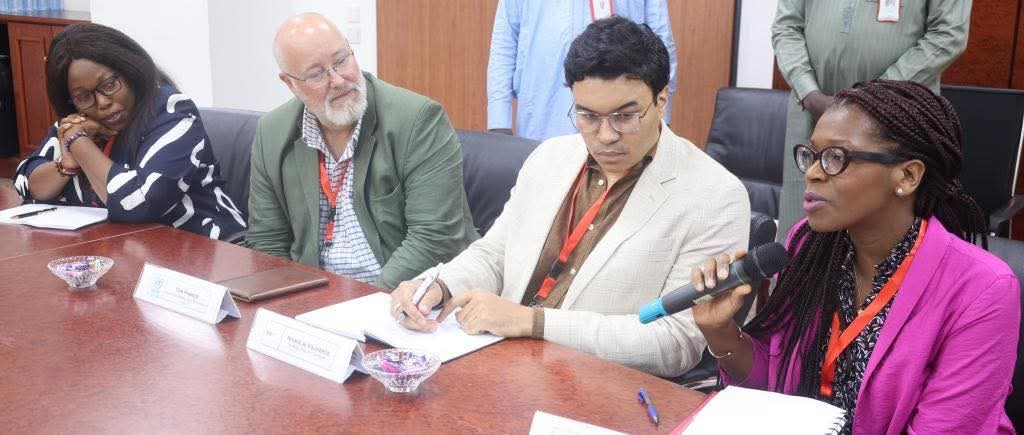
The EFCC Chairman, Ola Olukoyede, disclosed this during a meeting with officials from the United Nations Office on Drugs and Crime (UNODC) and representatives of the Canadian Government at the Commission’s headquarters in Jabi, Abuja, on April 24, 2026.

Speaking through his Chief of Staff, Michael Nzekwe, Olukoyede commended both organisations for their sustained support, noting that the EFCC has maintained a strong working relationship with them over the years. He emphasised that the Commission remains committed to combating terrorism financing and illegal mining, adding that significant progress has been made, including multiple convictions across its zonal commands.
He further noted that evolving criminal tactics, particularly the use of advanced technology, require enhanced institutional capacity to effectively counter emerging threats. According to him, the EFCC has continued to invest in training and operational improvements, especially in areas such as financial crimes, money laundering, and illicit mining.

“The Commission is open to deeper collaboration and remains committed to dismantling all structures linked to terrorism financing,” he said, stressing the importance of sustained capacity building.
Also speaking, the EFCC Director of Investigation, Abdulkarim Chukkol, revealed that intensified operations against illegal mining have led to increased arrests and prosecutions nationwide. He added that broader stakeholder engagement is essential to developing effective strategies to address the challenge.
The UNODC Project Coordinator, Tom Parker, explained that the visit was aimed at strengthening joint efforts to combat illicit financial flows linked to illegal mining and terrorism. He noted that a Canada-funded initiative has already facilitated the creation of a technical working group involving multiple stakeholders, including financial intelligence and regulatory bodies.
Similarly, Canadian representative Wilma Endamne highlighted areas of potential support, including the provision of equipment, software, and capacity-building programmes to enhance enforcement capabilities.
The renewed partnership underscores a growing international effort to disrupt financial networks sustaining criminal activities and improve coordinated responses to security threats in Nigeria.




Comments